personalized travel booking platform (ota)

personalized travel booking platform (ota)

01/ OVERVIEW

01/ OVERVIEW

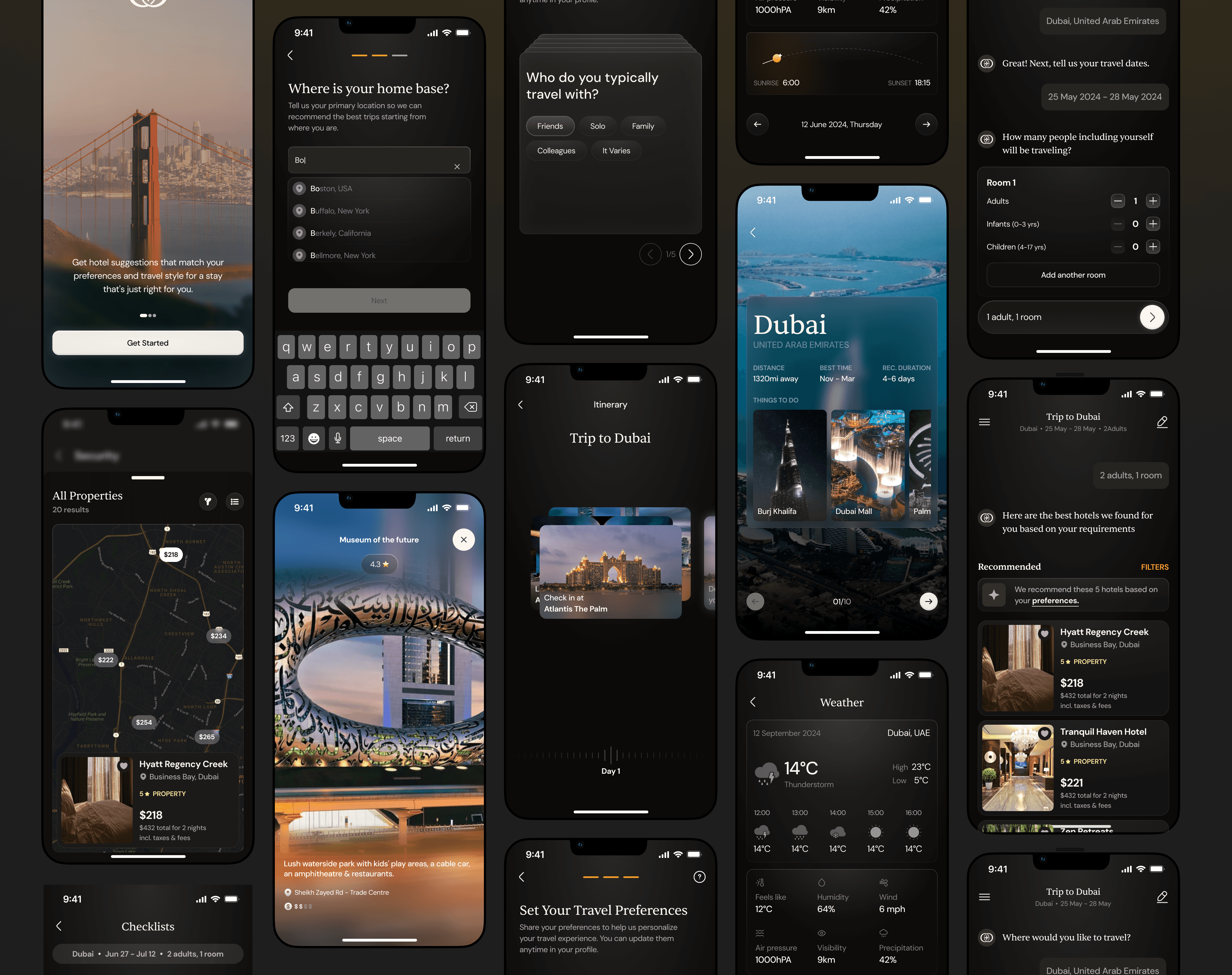
Wellim is an AI integrated travel booking platform that lets people plan their travel itinerary at one place. From a thought to plan a trip, to managing budget and checklist, to booking stays and transport, Wellim is the one-stop solution for a personalised solution.

02/ PROBLEM SPACE

02/ PROBLEM SPACE

AI was newly popular and the traditional booking platforms felt boring and a general listing site without any understanding of the users’ needs. Wellim was fixated on one goal - turning travels into memories.


The ideal product would be a competition to AirBnb and other hotel booking platforms. On the B2B end, Wellim would be a CRM to help properties manage their guests to provide an experience people remember. On the B2C end, Wellim would be a booking platform that takes care of the entire journey of the user.

03/ MY ROLE

03/ MY ROLE

As one of the founding designers in the team, I was a part of the B2C part of the product. It involved product conceptualisation, design, aligning stakeholders and communication with the developers, user and market research, and even business deals with suppliers. As a bonus, I also did experience the processes at the most premium villas for rent at Bali, Indonesia.
04/ DISCOVERY

04/ DISCOVERY

We researched the whole hospitality industry, from talking to luxury travellers, luxury properties at Dubai and Bali to understanding the user journey.
There on, we listed down opportunities and spaces where we could innovate at.

We researched the whole hospitality industry, from talking to luxury travellers, luxury properties at Dubai and Bali to understanding the user journey.
There on, we listed down opportunities and spaces where we could innovate at.

05/ DESIGN TENETS

05/ DESIGN TENETS

delight at every touchpoint.

seamless and intuitive experience.

leveraging motion to guide users.

  • delight at every touchpoint.

  • seamless and intuitive experience.

  • leveraging motion to guide users.

06/ PERSONALISING THE ONBOARDING

06/ PERSONALISING THE ONBOARDING

To let the AI adapt to a users’ interests, it was important to make the onboarding comprehensive.
At the same time, it was pertinent to keep users hooked to not affect the churn rates.

To let the AI adapt to a users’ interests, it was important to make the onboarding comprehensive.
At the same time, it was pertinent to keep users hooked to not affect the churn rates.

07/ INTEGRATING AI

07/ INTEGRATING AI

We wanted to combine the AI chat mental models with usual booking platforms to create an experience that didn’t feel deserted.

We wanted to combine the AI chat mental models with usual booking platforms to create an experience that didn’t feel deserted.

08/ DISCOVERING HOTELS

08/ DISCOVERING HOTELS

Hotel lists view integrated in the chat itself. But ranked in a way that is personalised ot the users' needs instead of randomly as seen on every booking site.

To reduce overload, only 5 listings were suggested, and the user could show intent by clicking on "see all" to view the others.

Hotel lists view integrated in the chat itself. But ranked in a way that is personalised ot the users' needs instead of randomly as seen on every booking site.

To reduce overload, only 5 listings were suggested, and the user could show intent by clicking on "see all" to view the others.

09/ OTHER FEATURES

09/ OTHER FEATURES

An AI based itinerary manager would build an itinerary list for the user based on their preferences.


Also, during research we observed the user journey in details to understand every little process, came up with two useful offerings:


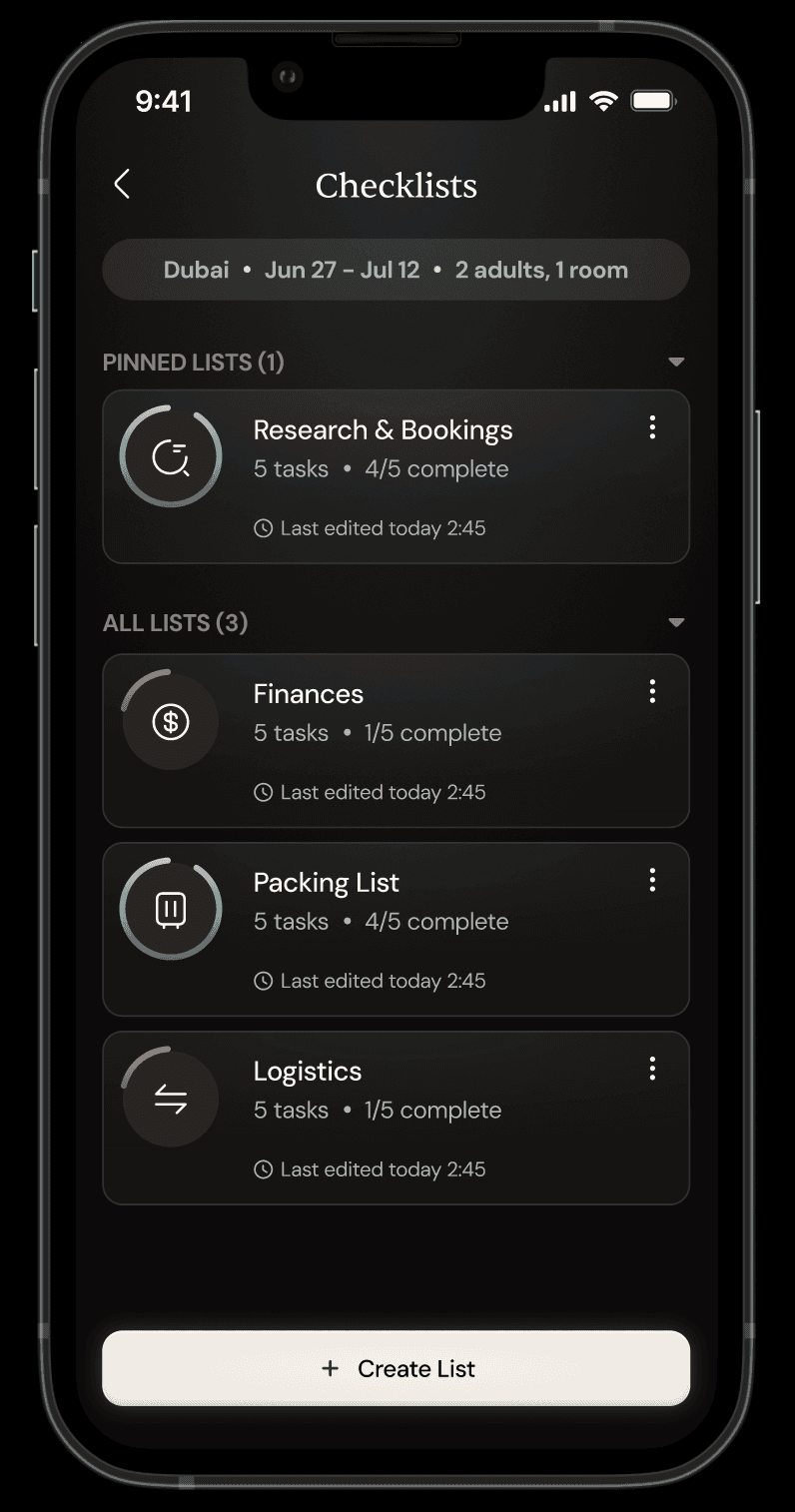
  1. Checklists - that would be a guide for the user to things during travelling, from packing certain items for the location, to visa help.

  2. Budget tracker - an integrated budget tracker tat would help the user keep a track of overall spendings with local currency conversions. The business usecase was to understand our user expenditures to label them for the backend CRM.

An AI based itinerary manager would build an itinerary list for the user based on their preferences.


Also, during research we observed the user journey in details to understand every little process, came up with two useful offerings:


  1. Checklists - that would be a guide for the user to things during travelling, from packing certain items for the location, to visa help.

  2. Budget tracker - an integrated budget tracker tat would help the user keep a track of overall spendings with local currency conversions. The business usecase was to understand our user expenditures to label them for the backend CRM.

10/ CONCLUSION

10/ CONCLUSION

We got some initial beta users who were excited to use the product. Then the project is temporarily stopped till fund raising. Meanwhile wellim.com is used to get customers.


I learnt a lot:

  1. Negotiating with hotel and travel API suppliers

  2. Architecting systems keeping AI in mind and designing like a product owner

  3. Design to development handoff and multiple stakeholder communications

We got some initial beta users who were excited to use the product. Then the project is temporarily stopped till fund raising. Meanwhile wellim.com is used to get customers.

I learnt a lot:

  1. Negotiating with hotel and travel API suppliers

  2. Architecting systems keeping AI in mind and designing like a product owner

  3. Design to development handoff and multiple stakeholder communications